Organic Baby Toothpaste: Why More Parents Are Choosing Xylitol Over Fluoride
Fluoride-free, made with xylitol, and safe to swallow — here's why organic baby toothpaste is becoming the top choice for parents in the UAE & Oman
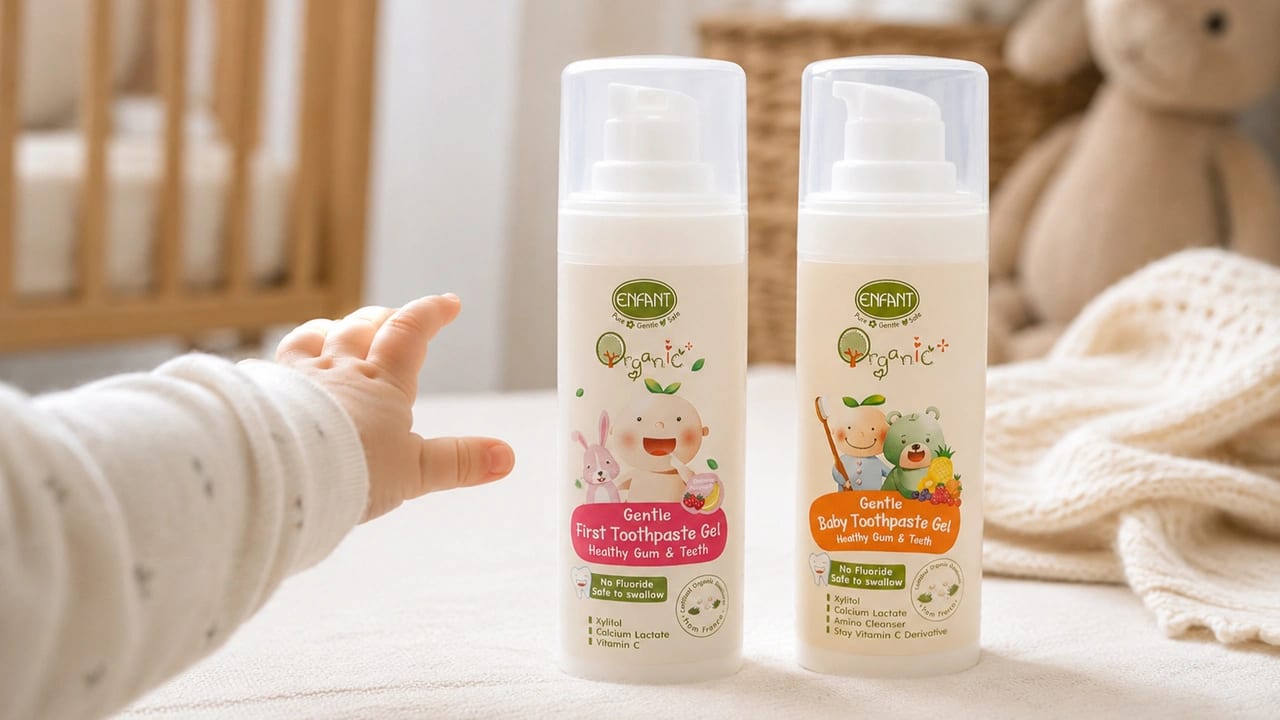
If you've started shopping for your baby's first toothpaste, you've probably seen two very different types on the shelf: fluoride-based and fluoride-free. For parents across the UAE and Oman, this is one of the first real choices in a baby's oral care journey — and it's more important than most people think.
Why Fluoride Worries Parents of Babies and Toddlers
Fluoride is good at making teeth stronger, but it comes with a catch: it's only fully safe once a child can spit it out on their own, usually somewhere between ages 2 and 3. Before that, babies and toddlers swallow most of what goes in their mouth — including toothpaste.
Swallowing a small amount once in a while isn't usually a big deal, but swallowing it again and again over time is why many child health experts recommend only a rice-grain amount of fluoride toothpaste for children under 3. For parents who want to avoid that worry altogether during the early years, a fluoride-free organic toothpaste is often the simpler, safer choice.
What Is Xylitol, and Why Is It in Baby Toothpaste?
Xylitol is a natural, plant-based sweetener — often taken from birch or corn — with one special quality: it doesn't feed the bacteria that cause tooth decay the way sugar does. In fact, studies show xylitol can actually lower the amount of decay-causing bacteria in the mouth over time.
That's why it's used in organic baby toothpaste and natural toothpaste for toddlers — it supports healthy teeth without relying on fluoride. It also has a mild, slightly sweet taste that babies usually accept more easily than strong mint flavors made for adults.
Shop the ENFANT Toothpaste & Oral Care
Why "Safe to Swallow" Actually Matters
Most babies don't learn to spit until well into toddlerhood. That means whatever toothpaste you use will likely be swallowed, at least partly, for months or even years.
A toothpaste made to be safe to swallow plans for this from the start, instead of treating it as a rare accident. This is one of the biggest reasons parents look for fluoride-free toothpaste for babies instead of just using less of a regular fluoride toothpaste.
Why SLS-Free Matters Too
Besides fluoride, there's another ingredient worth checking on any baby toothpaste label: Sodium Lauryl Sulfate, or SLS — a foaming agent found in many adult toothpastes. SLS has been linked to irritation and mouth ulcers in some children with sensitive gums, which is why SLS-free toothpaste for babies exists especially for this early stage.
Choosing a toothpaste without fluoride or SLS means one less thing to worry about, at a time when babies are already sensitive to new tastes and textures.
When Should You Start Using Toothpaste?
You can start with a small smear of toothpaste as soon as the first tooth comes in — even before your baby can rinse or spit. Brushing gently along the gums and new teeth twice a day builds a good habit early, and helps stop the "milk film" from feeds sitting on new teeth overnight.
Final Thoughts
Choosing the best baby toothpaste for the UAE and Oman often comes down to one simple question: what happens if my baby swallows it? For a growing number of parents, the answer is an organic, xylitol-based, fluoride-free toothpaste — gentle enough for new teeth, and made for the habits babies naturally have before they learn to spit.